Syphilis is a highly contagious sexually transmitted infection caused by the bacterium Treponema pallidum infection. The disease progresses through multiple stages if not treated promptly after infection.
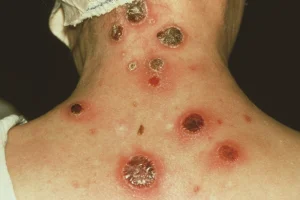
The first stage, known as primary syphilis, is characterized by the appearance of a localized lesion (chancre) at the site of infection along with swelling of nearby lymph nodes. This is followed by secondary syphilis, which typically develops several weeks later and includes systemic symptoms such as skin rashes, lymphadenitis, and the spread of infection to internal organs including the liver and kidneys. If left untreated, the disease can progress to tertiary syphilis, a severe stage that may occur years after initial infection and is associated with damage to blood vessels, the central nervous system, and the formation of granulomatous lesions (gummas).
Two main strategies are currently used for the diagnosis of syphilis:
Serological methods are the most widely used and are divided into:


In infected individuals, antibodies such as IgG and IgM are commonly produced against cardiolipin, a phospholipid found in mammalian cell membranes. Although the exact mechanism of this immune response remains unclear, it forms the basis of widely used diagnostic methods.
One of the most common non-treponemal assays is the Rapid Plasma Reagin test, which enhances detection sensitivity by combining cardiolipin with cholesterol and lecithin.
Traditional diagnostic kits often rely on charcoal particles as carriers for antigen immobilization. This study aims to develop an alternative diagnostic system using polymeric particles, specifically polyglycidyl methacrylate (PGMA), as microcarriers. This approach seeks to improve sensitivity, stability, and overall performance of syphilis diagnostic kits.
Polymeric microspheres of polyglycidyl methacrylate (PGMA) were synthesized using dispersion polymerization in ethanol. The reaction was conducted at controlled temperature and agitation to produce uniform particles.
After synthesis, the particles were separated by centrifugation and thoroughly washed. Surface modification was then performed by reacting the particles with ammonia, which opened the epoxide rings and introduced amine functional groups on the surface.
To enable efficient binding of biological molecules, the particles were further activated using glutaraldehyde (GA), a bifunctional crosslinking agent. This activation step created reactive aldehyde groups suitable for covalent attachment of antigens.

The antigen used in this study consisted of a mixture of cardiolipin, lecithin, and cholesterol. This mixture mimics the antigen composition used in standard serological tests.
Covalent immobilization of the antigen onto PGMA particles was achieved through GA-mediated crosslinking. Several experimental parameters were optimized during this process, including:
The amount of immobilized antigen was quantified using a modified protein assay method, ensuring high immobilization efficiency and functional activity.
Desorption studies were conducted under both acidic and basic conditions to evaluate the stability of antigen binding. Results confirmed minimal antigen leakage, indicating strong covalent attachment.
Additionally, control experiments showed no non-specific interactions between unmodified particles and syphilis-positive sera, confirming the specificity of the system.
The diagnostic performance of the synthesized kits was evaluated using agglutination assays. In these tests, antigen-coated particles were mixed with patient serum samples.
If antibodies against cardiolipin were present, visible agglutination occurred due to antigen-antibody interactions. The results were interpreted macroscopically after a standardized incubation and mixing procedure.

The performance of the newly developed kits was compared with commercial RPR test kits using both patient samples and positive controls.
Key findings include:
Notably, while the commercial kit showed limited detection at higher dilutions, the synthesized kits maintained reactivity, indicating enhanced sensitivity.

Several parameters were identified as optimal for antigen immobilization:
Importantly, even low antigen concentrations were sufficient for effective detection, offering a cost advantage by reducing reagent consumption.
The synthesized PGMA particles exhibited uniform size distribution and high monomer conversion efficiency. Surface functionalization was successfully achieved, enabling effective antigen attachment.
The use of glutaraldehyde as a spacer molecule improved antigen orientation and preserved its biological activity, contributing to high immobilization efficiency (up to 99%).
Agglutination tests using patient sera confirmed the functionality of the immobilized antigen. No false-positive reactions were observed with negative samples, demonstrating high specificity.
Among the tested formulations, certain kits showed superior performance, particularly in detecting low antibody concentrations. These kits demonstrated comparable or better sensitivity than commercial alternatives.
One significant advantage of this method is the reduced requirement for antigen. Lower antigen usage allows a larger number of tests to be performed with the same amount of material, improving cost-effectiveness.
Additionally, the polymer-based system offers improved stability, with consistent performance observed over extended storage periods.
This study demonstrates that polymeric PGMA particles can serve as effective carriers for antigen immobilization in syphilis diagnostic kits. The developed system shows high sensitivity, specificity, and stability, comparable to widely used commercial tests.
The replacement of traditional charcoal particles with polymeric microspheres represents a significant advancement, offering both technical and economic benefits. This approach has strong potential for further development and application in serological diagnostics.
