Flow analysis techniques have played a crucial role in the advancement of analytical chemistry, particularly in environmental and marine studies. The concept of continuous flow analysis (CFA) was first introduced in 1957 by Skeggs, marking a major breakthrough in automated chemical analysis. This innovation enabled continuous processing of samples and led to the widespread adoption of flow-based systems for routine laboratory analyses.
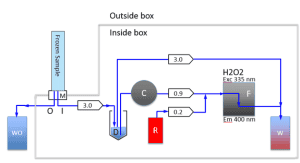
During the 1970s, the development of flow injection analysis (FIA) further enhanced analytical capabilities. Independently introduced by Ruzicka and Hansen, and Stewart and colleagues, FIA offered significant advantages such as operational simplicity, rapid sample processing, low reagent consumption, and reduced contamination risks due to closed-system operation. Because of these benefits, FIA became a foundation for modern automated analytical methods.
Over time, several advanced flow-based techniques have emerged, including sequential injection analysis (SIA), reverse FIA (rFIA), multi-syringe flow analysis (MSFA), lab-on-valve (LOV) systems, and microfluidic-based approaches. These innovations have improved flexibility, automation, and analytical performance, allowing adaptation to complex environmental samples such as seawater.
Despite extensive applications of flow techniques in water analysis, their specific use in seawater analysis presents unique challenges. Seawater is a complex matrix characterized by low analyte concentrations, high salinity, and significant ionic interferences ( calcium and magnesium ions). Additionally, variations in salinity can cause analytical errors, particularly in spectrophotometric detection, through phenomena such as the Schlieren effect and refractive index changes.
This review focuses on recent developments in the application of flow techniques for seawater analysis, particularly for studies conducted in coastal, estuarine, and open ocean environments.
The determination of nutrients especially nitrogen and phosphorus—is essential for understanding marine biogeochemical cycles and ecosystem dynamics.
Most analytical methods for phosphate rely on the phosphomolybdenum blue reaction, which measures dissolved reactive phosphorus. Automated CFA-based systems are widely used in marine laboratories; however, they are often affected by matrix interferences due to salinity variations.
Recent innovations aim to reduce these interferences. For example, loop flow systems and fluorescence-based detection methods have improved sensitivity and minimized the influence of competing ions such as silicate and arsenate. These methods enable faster and more reliable in situ monitoring of phosphate concentrations.

Nitrite analysis is commonly performed using the Griess reaction, which produces a colored azo compound detectable by spectrophotometry. Recent developments include microfluidic flow systems with long optical path cells, which significantly improve sensitivity while reducing reagent consumption. These systems are particularly suitable for continuous environmental monitoring.

Nitrate is typically quantified after reduction to nitrite, followed by detection using the Griess method. Traditional reduction techniques often involve toxic reagents such as cadmium. Newer approaches use alternative reductants like vanadium chloride, offering safer and more efficient analysis with comparable accuracy.

Ammonium measurement is more challenging due to interference from salinity and matrix effects. The widely used indophenol blue (Berthelot) reaction has been improved by integrating gas-permeable membranes and long-path flow cells, which reduce interferences and enhance sensitivity.
Additionally, alternative reagents have been introduced to replace toxic compounds such as phenol, improving safety and environmental compatibility. Miniaturized flow systems using conductimetric detection also provide efficient and cost-effective solutions.

Trace metals in seawater are important for both environmental monitoring and biological processes. Flow techniques combined with on-line preconcentration systems and sensitive detection methods have significantly improved trace metal analysis.
Aluminum is used as a tracer for atmospheric dust deposition, while iron is a key micronutrient influencing marine productivity. Flow systems using fluorescence detection and long-path optical cells allow detection at nanomolar levels, even in complex seawater matrices.

Flow-based methods enable rapid detection of toxic metals through complexation reactions and spectrometric techniques. For mercury, highly sensitive systems using cold vapor atomic fluorescence allow detection at extremely low concentrations, suitable for environmental monitoring.

Advanced flow techniques have also been applied to detect essential and emerging trace metals. These methods often use catalytic reactions or fluorescence-based detection and are optimized for high sensitivity and minimal sample preparation.
Monitoring the marine carbonate system is essential for studying ocean acidification. Key parameters include pH, dissolved inorganic carbon (DIC), and total alkalinity (TA).
Flow-based automated systems have been developed to measure these parameters with high precision and minimal manual intervention. These systems often use spectrophotometric detection and are suitable for long-term in situ monitoring, including deployment on moored instruments.

Flow techniques are also applied to measure various additional parameters in seawater:
Flow analysis techniques offer numerous advantages, including automation, high throughput, low reagent consumption, and reduced contamination risk. These characteristics make them ideal for marine environmental studies.
However, challenges remain, particularly for long-term in situ applications, where reagent consumption and system stability are critical. Emerging technologies such as microfluidics, lab-on-chip systems, and autonomous sensors are expected to address these limitations.
Future progress will depend on stronger collaboration between analytical chemists and marine scientists, as well as continued development of robust, miniaturized, and field-deployable systems. These advancements will play a key role in improving our understanding of marine environments and supporting sustainable ocean monitoring.
